Emptiness, enclosed
DOI: 10.60650/emptiness-gd3w-yp12
Nino,[1]All personal names given here are pseudonyms. a village schoolteacher in Tsalka – a municipality in southern Georgia – had witnessed far too many evictions in her village. When she first moved from the Adjara highlands to Tsalka in the early 2000s, the village was still thriving, and she had a full class of students to teach at school. “Oh god…now, exactly because of these evictions, only half of us remained…so many of my beloved students had to leave…,” Nino told me. She recounted bitter stories of violent evictions carried out by the police, remembering how her favourite neighbours were forced out of their house with small children in their arms while having nowhere else to go. Eventually, people either moved to empty houses in other villages, or went to their relatives in the big cities.
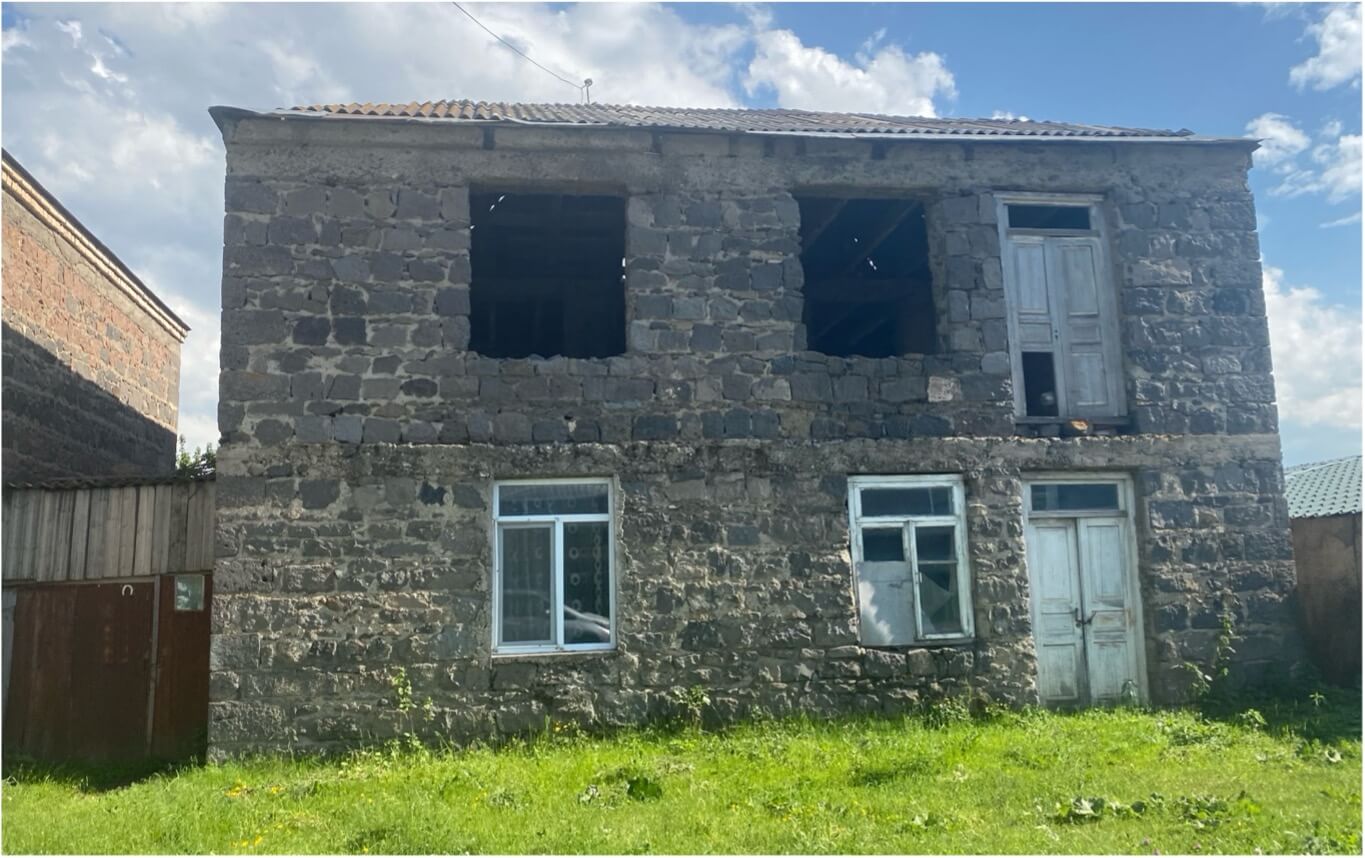
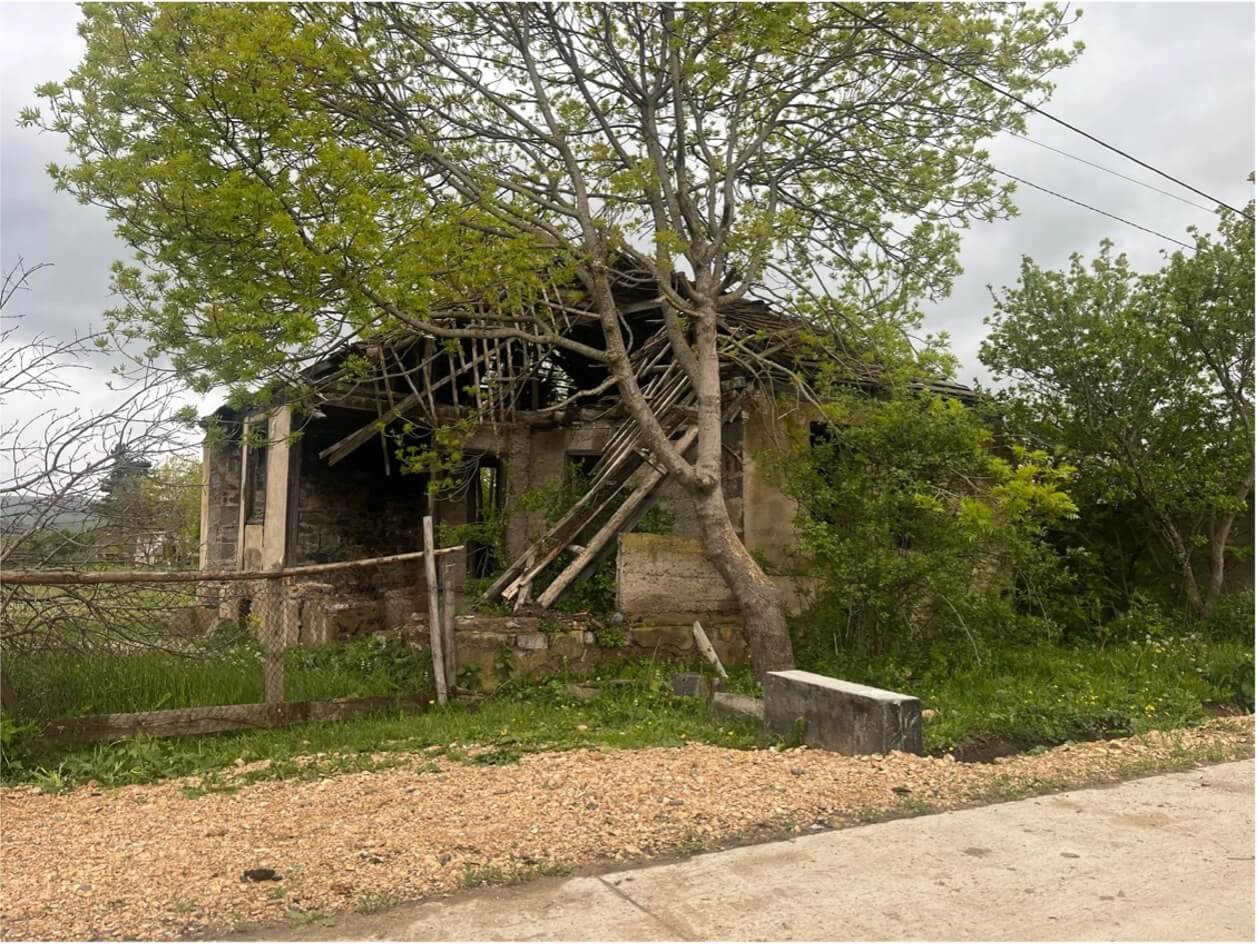
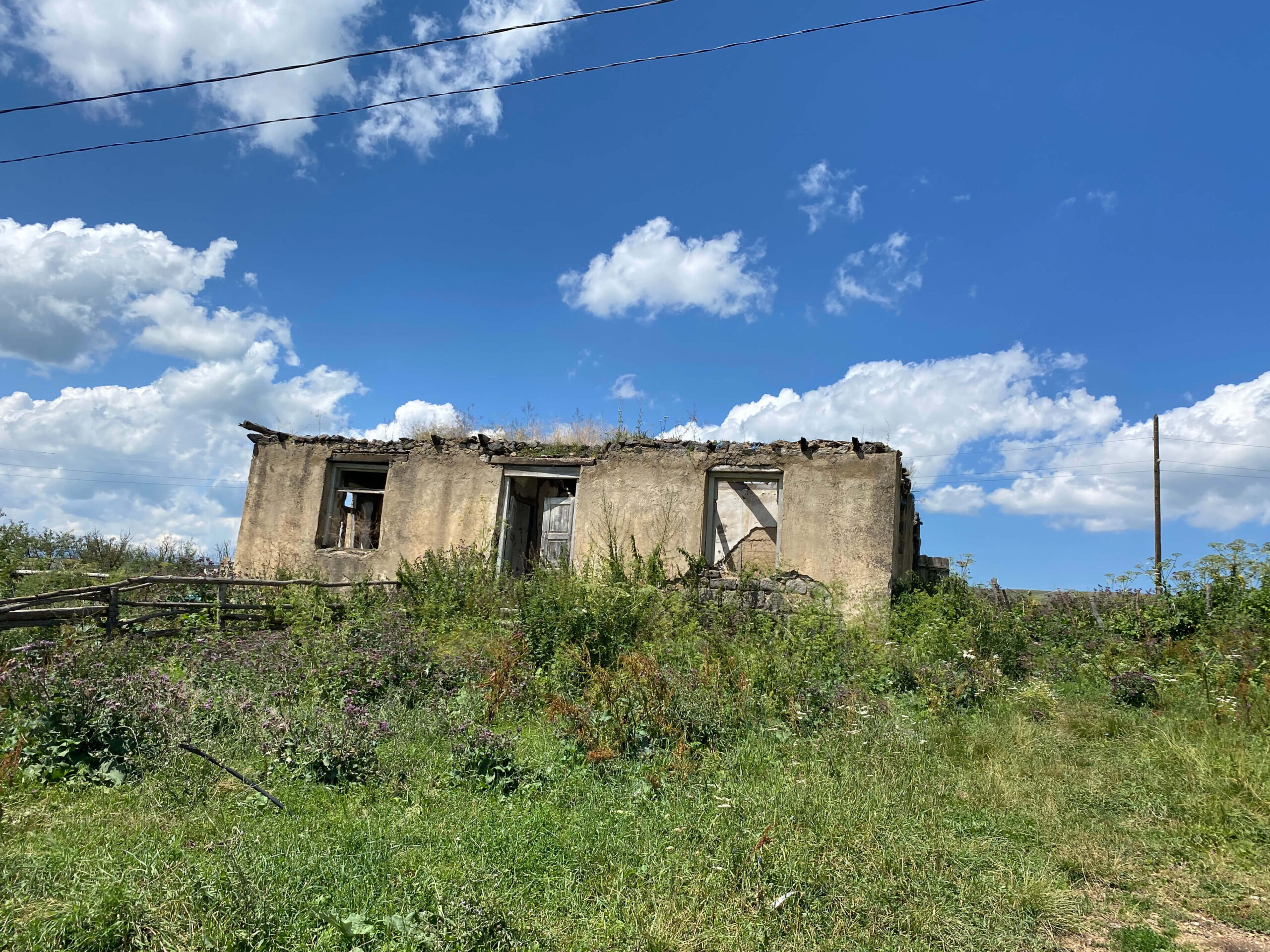
Emptied, abandoned, and demolished buildings are symptomatic for Tsalka. Like in many other villages and towns in Georgia, the empty spaces in Tsalka have become the aftermath of various life trajectories affected by post-socialist deindustrialization, decollectivization, and consequently, rural depopulation. Yet, the case of Tsalka unfolds another peculiar story of how emptiness is maintained and reproduced through evictions and the enclosure of abandoned spaces. By unpacking the idiosyncrasies of Tsalka, I explore here the presence of the state in empty spaces, as the protector of private property regimes, through its police and court systems. On the ground-level, this essay also illustrates how local communities experience emptiness as a deeply felt injustice.

Ethnographic context
The majority of the population in Tsalka used to consist of Pontic Greek communities who came to the southern part of Georgia as part of mass exile from the Ottoman Empire in the 19th century. The Greek population later left Tsalka for Greece as part of the Greek government’s repatriation programme[2]Through this repatriation programme, these Greek families were able to acquire Greek citizenship and receive benefits from the government, such as state loans for purchasing apartments. after the fall of the Iron Curtain. Despite the mass outmigration, many of the Greek families maintained their legal ownership of houses and lands in Tsalka. The Greek communities, now emigrated, usually left their house keys with their relatives or neighbours in the respective villages. In this regard, the latter became proxy-landlords and acted as an intermediary between the legal owner and the new tenant of the houses.
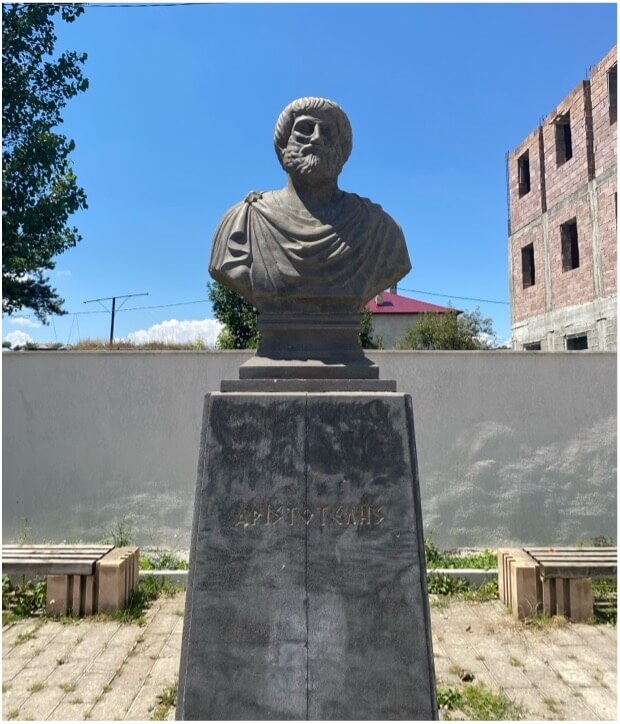

Eventually, many of the empty houses left behind by the Greeks were occupied by Adjarian families,[3]During the same period, Tsalka also became a recipient of disaster-affected families from Svaneti region (in the northern part of Georgia); my research focuses on resettlements from the Adjara … Continue reading who were forcibly displaced due to large-scale landslides in the Adjara highlands at the end of the 1980s. As the Adjarians’ houses and agricultural lands were completely swamped by the landslides in 1989, the Soviet state, in its last years of functioning, ordered resettlement and new housing construction for the disaster-affected population in Tsalka. However, the new housing constructions, as well as the monitoring of the resettlement and integration process, was not accomplished due to the collapse of the system. The relocation was chaotic, and disaster-affected families usually had to seek temporary shelter in schools and hospitals before finding available houses in Tsalka. The proxy-landlords provided the keys to access the abandoned houses.[4]Besides keeping the keys, the proxy-landlords would also sometimes collect “key money” from the tenant while the legal owner was away. This payment was typically much lower than an … Continue reading
Eventually, the return of emigrated Greeks to Georgia in the past decade[5] Among other reasons, the return of Greeks to Georgia resulted from the government-debt crisis in Greece. and seeing strangers living in their houses prompted property disputes between the two communities. In many cases, the property conflicts were taken to court, leading to the eviction of the Adjarians. The final court decisions were primarily made based on the logic of private property: every individual has the fundamental right to private ownership and this right is protected by the state. While in 1998 the state introduced the legal term ‘ecological migrant’ to regulate the resettlement of and housing provision for the displaced populations, families would usually end up on long waiting lists without any hope of receiving housing from the state. The state also initiated purchases of the abandoned houses by reaching out to the legal owners in Greece; however, the budget allocated for this plan was only sufficient to cover part of the population.
Why should an empty house go to waste?
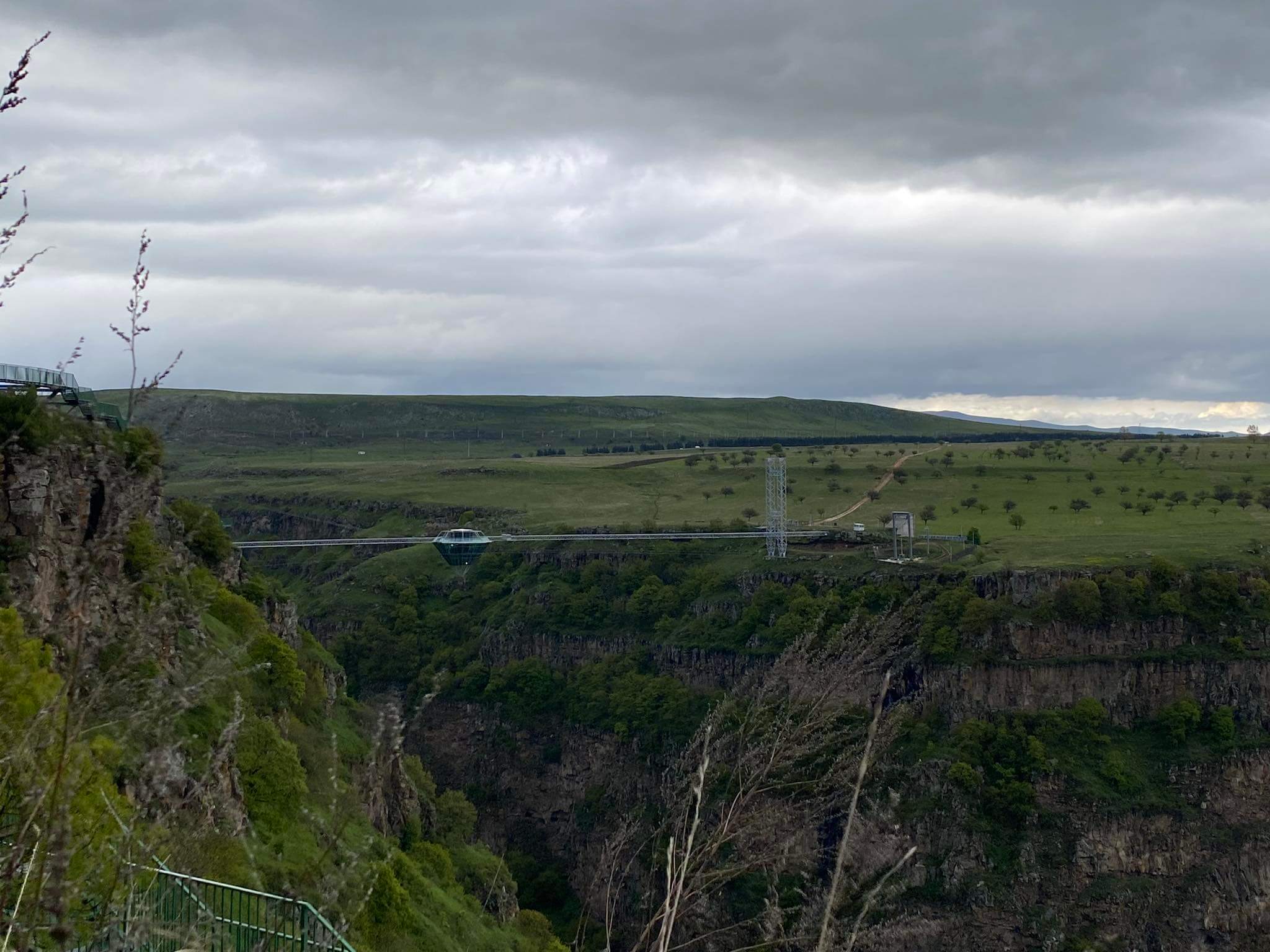
Witnessing and experiencing multiple evictions, Adjarians cannot fully grasp the morality behind the evictions. From many Adjarians’ perspective, the Greeks only need to maintain the legal ownership of their summerhouses, while their own claim for the house and land is more existential. Why should an empty house go to waste if there are people who urgently need it? This was a question asked by many of my Adjarian interlocutors in different villages. “There are a lot of houses that are abandoned and demolished. The houses, whose owners were too stubborn to sell them and raised the prices, are now the ones that are demolished,” said Natia, who had experienced eviction several times in the outskirts of the town. Natia’s hope was to someday buy the house from the Greek family who owned it, if only they would let her stay in the house until she could afford the mortgage. But the price requested by the owner was too high for her. As the price negotiations failed, Natia and her family were forced to leave the house. According to many of my interlocutors in Tsalka, the emigrated houseowners started increasing rent prices as Tsalka became a touristic zone when Dashbashi canyon was privatized and turned into a tourist attraction by an Israeli-based investor in 2012.
The Greek community’s perspective differs from that of the Adjarians’. “My parents want to keep the house in Tsalka because it was built by my grandfather in Soviet times; they are emotionally attached to the house and would only sell it for a high price, even if it isn’t worth much,” Theodoros told me during my 2025 fieldtrip in Thessaloniki. According to my conversations with two generations of emigrated Greeks from Tsalka, the existing properties are also one of their remaining links to ancestral cemeteries in Tsalka, which many of them visit annually during Orthodox Easter. However, while the touristification of Tsalka might not carry much importance for many Greek families in determining the value of their houses, the general growth of Tsalka as a tourist zone and increased number of hotels around the region has certainly increased prices on products and housing in the municipality.
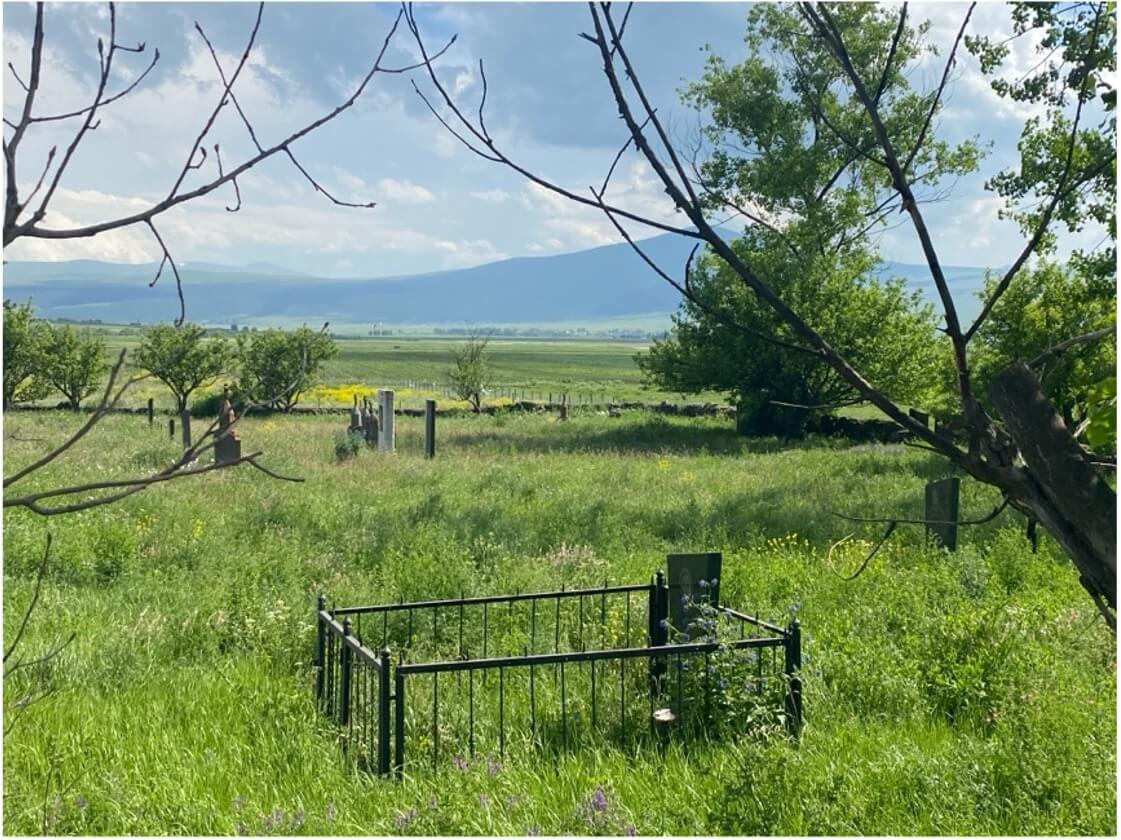
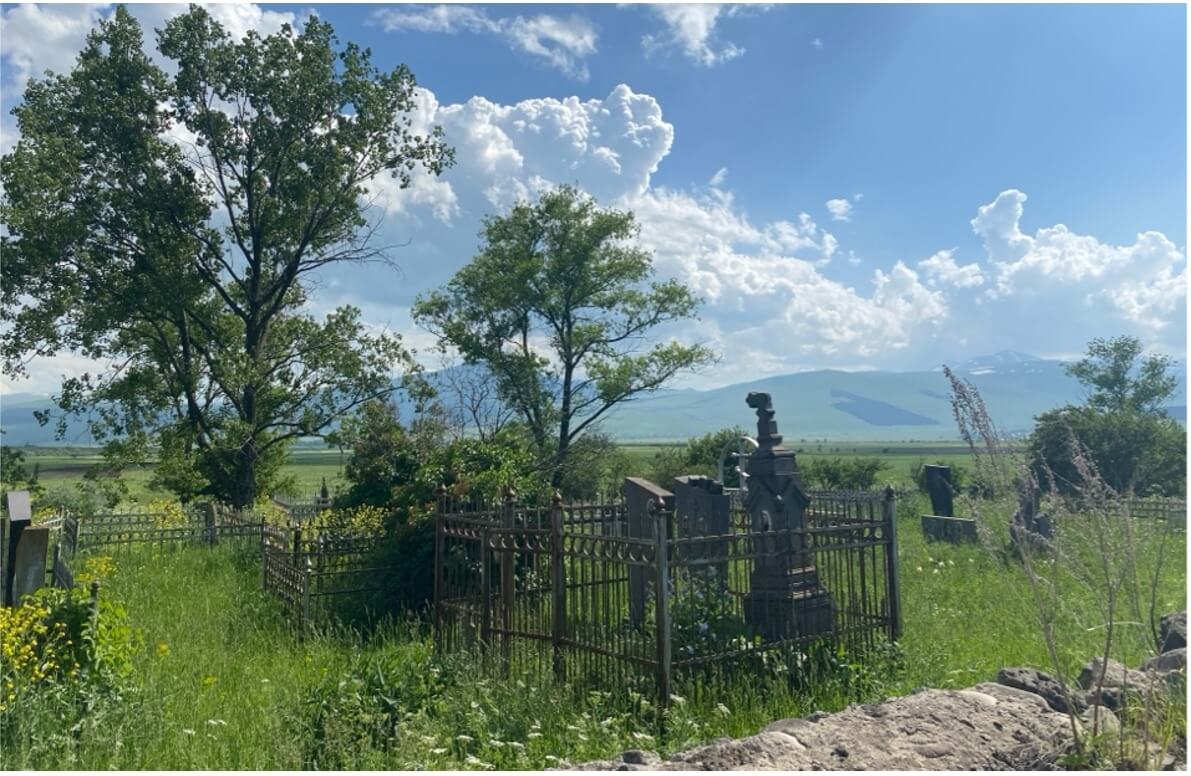
The problem for Adjarians is not only the wasted residential property but also the land. “This is what’s breaking my heart the most – one of the best soils in Georgia is decaying because nobody is cultivating it; their owners have left the country decades ago and since it is a private property, we cannot touch it. I’m not suggesting violating anyone’s private property rights, but the state should intervene when the owner of the land is absent for a long time. It should be in the interest of the state not to have any wasted agricultural resources,” 65-year-old Lasha told me while talking about the main problems in Tsalka. Similar concerns were shared by Gia from another village: “There are indeed a lot of empty houses. The problem is that the peasants don’t have enough land. A private owner owns thousands of hectares, while peasants have nothing.”
Emptiness as an injustice
Tsalka encompasses the coexistence of two stark realities: the threat of homelessness and a surplus of unused, abandoned properties. For Adjarians, many of whom have lived (and continue to live) in houses owned by others, emptiness feels like an injustice. As they adjusted to their new lives in Tsalka after post-disaster resettlement, they were able to envision their future here. Yet there does not seem to be any place for them, despite the abundance of empty spaces. Emptiness is multidimensional, and one of its crucial aspects can be affective (Dzenovska 2020). Many of my Adjarian interlocutors spoke with anger, irritation, and a sense of regret about the abandoned, half-ruined, or fully demolished houses. Similar sentiments were expressed regarding agricultural land, whose private owners are nowhere to be found to cultivate it. In this context, many of my interlocutors project their frustration onto the Greek owners who left the country decades ago.
This sense of injustice is perpetuated by the drastic privatization undertaken by the newly emerged neoliberal authoritarian Georgian state (Eradze 2022), marked by criminalization of poverty and homelessness, and consequently, the expansion of its police, court, and prison apparatus (Wacquant 2012). Through evictions, the state maintains control over empty spaces, (re)producing unjust and unequal access to resources for local communities. The case of Tsalka exemplifies how the state can selectively withdraw housing provision or the regulation of land use (e.g. commodification of the Dashbashi canyon), while remaining highly present in enforcing private property rights. At the same time, the locals recognize the limitations of liberal ideals of private ownership and feel it as an injustice. Ultimately, emptiness becomes a site of contestation, revealing both the constraints of neoliberal property regimes and the possibilities for imagining alternative futures.
This is an Open Access article, distributed under the terms of the CC-BY (Creative Commons Attribution 4.0 International) licence, which permits unrestricted re-use, distribution, and reproduction in any medium, provided the original work is properly cited.
Footnotes
| ↑1 | All personal names given here are pseudonyms. |
|---|---|
| ↑2 | Through this repatriation programme, these Greek families were able to acquire Greek citizenship and receive benefits from the government, such as state loans for purchasing apartments. |
| ↑3 | During the same period, Tsalka also became a recipient of disaster-affected families from Svaneti region (in the northern part of Georgia); my research focuses on resettlements from the Adjara highlands. |
| ↑4 | Besides keeping the keys, the proxy-landlords would also sometimes collect “key money” from the tenant while the legal owner was away. This payment was typically much lower than an average rent and not always fixed; most importantly, the informal agreement came with the tenant’s responsibility to look after the house. |
| ↑5 | Among other reasons, the return of Greeks to Georgia resulted from the government-debt crisis in Greece. |